
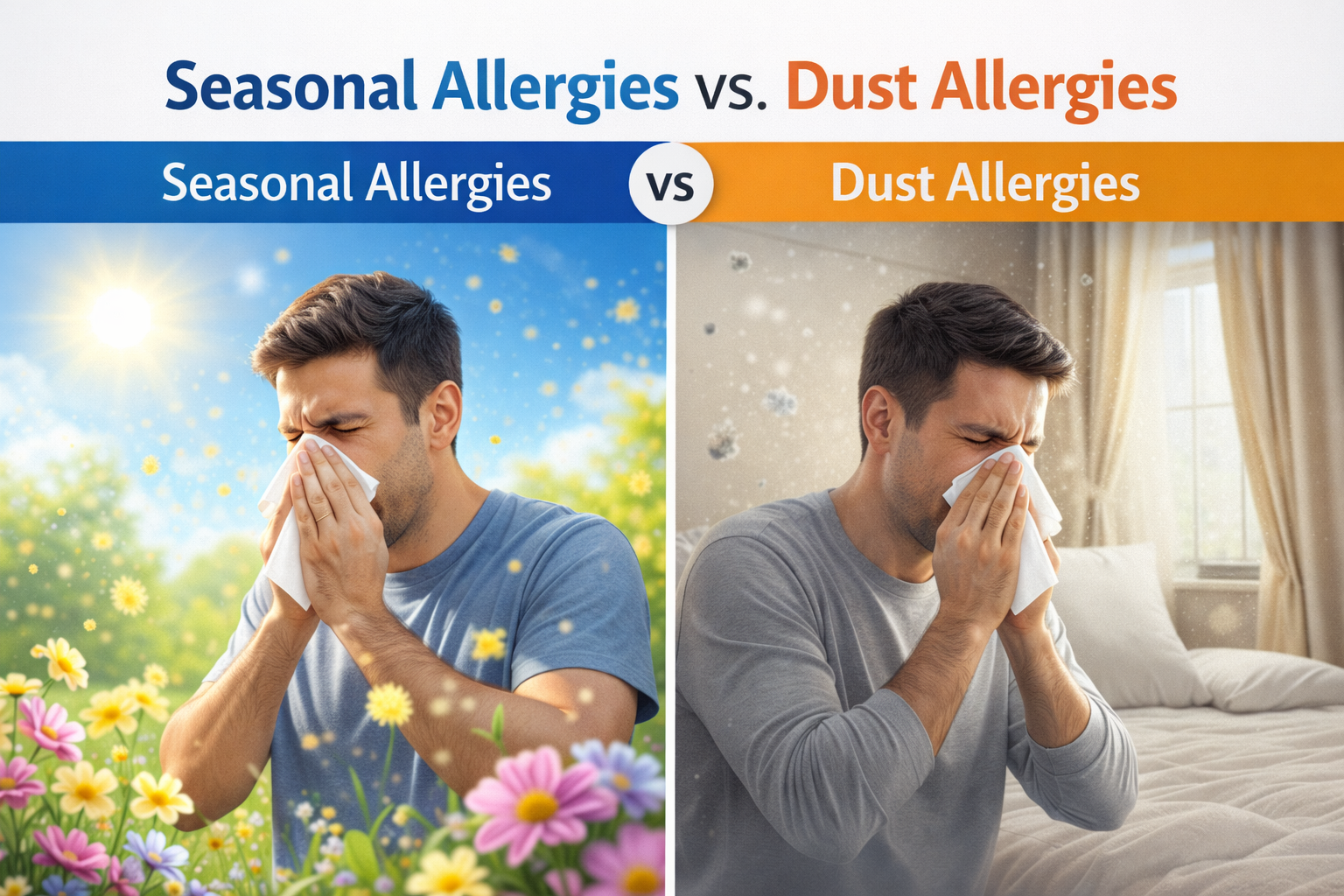
Allergies have become increasingly common in modern lifestyles, affecting millions of people across the world. From sneezing and watery eyes to persistent cough and breathing difficulties, allergies can significantly impact daily comfort and productivity. Among the many types of allergies, Seasonal Allergies vs. Dust Allergies is one of the most common comparisons people search for, as both share similar symptoms but differ in causes, triggers, duration, and treatment approaches.
Understanding the difference between Seasonal Allergies vs. Dust Allergies is essential for accurate diagnosis, effective treatment, and long-term relief. This detailed guide explains everything you need to know about these two major types of allergies, including symptoms, causes, prevention tips, lifestyle changes, and when to consult a specialist. We also highlight why consulting the top allergy specialist in Rohini and the best allergy specialist in Delhi, such as experts at Taneja ENT and Eye Clinic, can help you manage your allergies effectively.
Understanding Allergies: A Quick Overview
Before diving deeper into Seasonal Allergies vs. Dust Allergies, it is important to understand what allergies actually are. An allergy occurs when the immune system reacts excessively to a harmless substance known as an allergen. Common allergens include pollen, dust mites, mold, pet dander, and certain foods.
When exposed to allergens, the immune system releases chemicals like histamine, causing inflammation and allergy symptoms. The nature and timing of exposure determine whether the reaction is seasonal or persistent throughout the year, which is the core difference in Seasonal Allergies vs. Dust Allergies.
What Are Seasonal Allergies?
Seasonal allergies, often referred to as hay fever or allergic rhinitis, occur during specific times of the year when pollen levels are high. Common sources of pollen include trees, grasses, weeds, and flowering plants.
Common Triggers of Seasonal Allergies
- Tree pollen (spring)
- Grass pollen (summer)
- Weed pollen (autumn)
- Mold spores (humid seasons)
Symptoms of Seasonal Allergies
People suffering from seasonal allergies often experience:
- Sneezing
- Runny or blocked nose
- Itchy eyes, nose, and throat
- Watery eyes
- Headache
- Fatigue
The intensity of symptoms varies depending on pollen levels, weather conditions, and individual sensitivity. In the comparison of Seasonal Allergies vs. Dust Allergies, seasonal allergies are more predictable and time-bound.
What Are Dust Allergies?
Dust allergies occur due to allergens found in household dust, including dust mites, mold spores, and pet dander. Unlike seasonal allergies, dust allergies can affect individuals throughout the year.
Common Triggers of Dust Allergies
- Dust mites
- Mold
- Pet hair and dander
- Cockroach debris
Symptoms of Dust Allergies
Symptoms of dust allergies closely resemble those of seasonal allergies and may include:
- Frequent sneezing
- Nasal congestion
- Persistent cough
- Wheezing
- Watery eyes
- Shortness of breath
When comparing Seasonal Allergies vs. Dust Allergies, the key difference lies in duration—dust allergies can persist year-round, while seasonal allergies occur during specific periods.
Seasonal Allergies vs. Dust Allergies: Key Differences
Understanding Seasonal Allergies vs. Dust Allergies becomes easier when examining their major differences.
1. Duration
Seasonal allergies appear during specific seasons, whereas dust allergies persist throughout the year.
2. Triggers
Seasonal allergies are triggered by outdoor allergens like pollen, while dust allergies result from indoor allergens such as dust mites and mold.
3. Environmental Influence
Weather changes significantly impact seasonal allergies, but dust allergies are more influenced by indoor cleanliness and humidity.
4. Symptom Pattern
In Seasonal Allergies vs. Dust Allergies, symptoms of seasonal allergies tend to worsen outdoors, while dust allergy symptoms intensify indoors.
Causes Behind Seasonal Allergies vs. Dust Allergies
Why Do Seasonal Allergies Occur?
Seasonal allergies occur due to airborne pollen. During spring and summer, plants release pollen into the air for reproduction, which triggers allergic reactions in sensitive individuals.
Why Do Dust Allergies Occur?
Dust allergies are caused by microscopic organisms like dust mites that thrive in warm, humid environments. Poor ventilation, infrequent cleaning, and clutter can worsen exposure.
This fundamental difference in allergen sources is central to understanding Seasonal Allergies vs. Dust Allergies.
Risk Factors: Who Is More Prone to Allergies?
Certain factors increase the likelihood of developing allergies:
- Family history
- Urban living
- Pollution
- Smoking exposure
- Weak immune system
People living in polluted cities often experience more intense symptoms, making professional consultation with the top allergy specialist in Rohini or the best allergy specialist in Delhi crucial for long-term management.
How Seasonal Allergies vs. Dust Allergies Affect Daily Life
Allergies can disrupt sleep, reduce productivity, and impact mental well-being. Persistent symptoms often lead to fatigue, irritability, and reduced focus. In children, allergies can affect academic performance, while in adults, work efficiency can decline.
Understanding Seasonal Allergies vs. Dust Allergies allows individuals to plan their routines, medication, and preventive strategies more effectively.
Diagnosis of Seasonal Allergies vs. Dust Allergies
Accurate diagnosis is essential for proper treatment.
Common Diagnostic Tests
- Skin prick test
- Blood tests (IgE levels)
- Nasal smear tests
Consulting the top allergy specialist in Rohini or Narela ensures precise identification of allergens and a customized treatment plan. Expert evaluation is particularly important when symptoms persist or worsen.
Treatment Options for Seasonal Allergies vs. Dust Allergies
Treatment varies depending on the type and severity of allergy.
Medications
- Antihistamines
- Decongestants
- Nasal corticosteroids
- Leukotriene inhibitors
Immunotherapy
Allergy shots or sublingual tablets can gradually reduce sensitivity to allergens. This long-term treatment is effective for both Seasonal Allergies vs. Dust Allergies.
Home Remedies and Lifestyle Changes
Simple lifestyle changes can significantly reduce allergy symptoms.
For Seasonal Allergies
- Stay indoors during peak pollen hours
- Use air purifiers
- Wash face and hands after outdoor exposure
For Dust Allergies
- Vacuum regularly
- Use allergen-proof mattress covers
- Maintain low indoor humidity
These strategies complement medical treatment and help manage Seasonal Allergies vs. Dust Allergies effectively.
Preventive Tips for Seasonal Allergies vs. Dust Allergies
Prevention plays a crucial role in long-term allergy management.
- Keep windows closed during high pollen seasons
- Clean bedding weekly
- Use HEPA air filters
- Avoid carpets and heavy curtains
Preventive care reduces symptom severity and improves quality of life in both Seasonal Allergies vs. Dust Allergies.
Seasonal Allergies vs. Dust Allergies in Children
Children are particularly vulnerable to allergies. Early diagnosis and proper treatment help prevent complications like asthma and sinus infections.
Parents should seek timely consultation with the best allergy specialist in Delhi for accurate diagnosis and effective management.
When to Consult a Specialist?
You should consult a specialist if you experience:
- Persistent sneezing and nasal congestion
- Difficulty breathing
- Frequent sinus infections
- Poor sleep quality due to symptoms
The top allergy specialist in Rohini can offer advanced diagnostic tools and personalized care to help manage both Seasonal Allergies vs. Dust Allergies.
Why Choose Taneja ENT and Eye Clinic?
When it comes to comprehensive allergy care, Taneja ENT and Eye Clinic stands out as the best allergy clinic in Delhi. With experienced specialists, modern diagnostic facilities, and patient-focused treatment plans, the clinic provides holistic solutions for allergy sufferers.
Patients seeking the best allergy specialist in Delhi and the top allergy specialist in Rohini trust Taneja ENT and Eye Clinic for accurate diagnosis, effective treatment, and long-lasting relief.
Advanced Allergy Care at the Best Allergy Clinic in Delhi
Taneja ENT and Eye Clinic offers:
- Advanced allergy testing
- Personalized treatment protocols
- Immunotherapy solutions
- Comprehensive ENT care
Their patient-centered approach ensures that individuals suffering from Seasonal Allergies vs. Dust Allergies receive reliable, compassionate, and expert medical attention.
Long-Term Management of Seasonal Allergies vs. Dust Allergies
Managing allergies is an ongoing process. Long-term strategies include:
- Regular medical follow-ups
- Medication adherence
- Environmental modifications
- Lifestyle adjustments
These practices help individuals maintain control over Seasonal Allergies vs. Dust Allergies and enjoy an improved quality of life.
Psychological Impact of Allergies
Chronic allergies can lead to stress, anxiety, and mood disturbances. Addressing emotional well-being along with physical symptoms is crucial. Professional support and proper medical guidance can make a significant difference.
Conclusion
Understanding the differences between Seasonal Allergies vs. Dust Allergies empowers individuals to take control of their health. While both types of allergies share similar symptoms, their triggers, duration, and management strategies differ significantly. By identifying the correct allergen, adopting preventive measures, and seeking expert care, individuals can reduce symptoms and enhance daily comfort.
For comprehensive allergy diagnosis and treatment, consulting the top allergy specialist in Rohini at the best allergy clinic in Delhi, Taneja ENT and Eye Clinic, is highly recommended. Their advanced medical expertise, patient-friendly approach, and state-of-the-art facilities ensure effective management of Seasonal Allergies vs. Dust Allergies, helping you breathe easier and live healthier every day.
If allergies are affecting your quality of life, do not ignore the signs. Early intervention and expert care can make all the difference. Take the first step today toward a healthier, allergy-free life.