
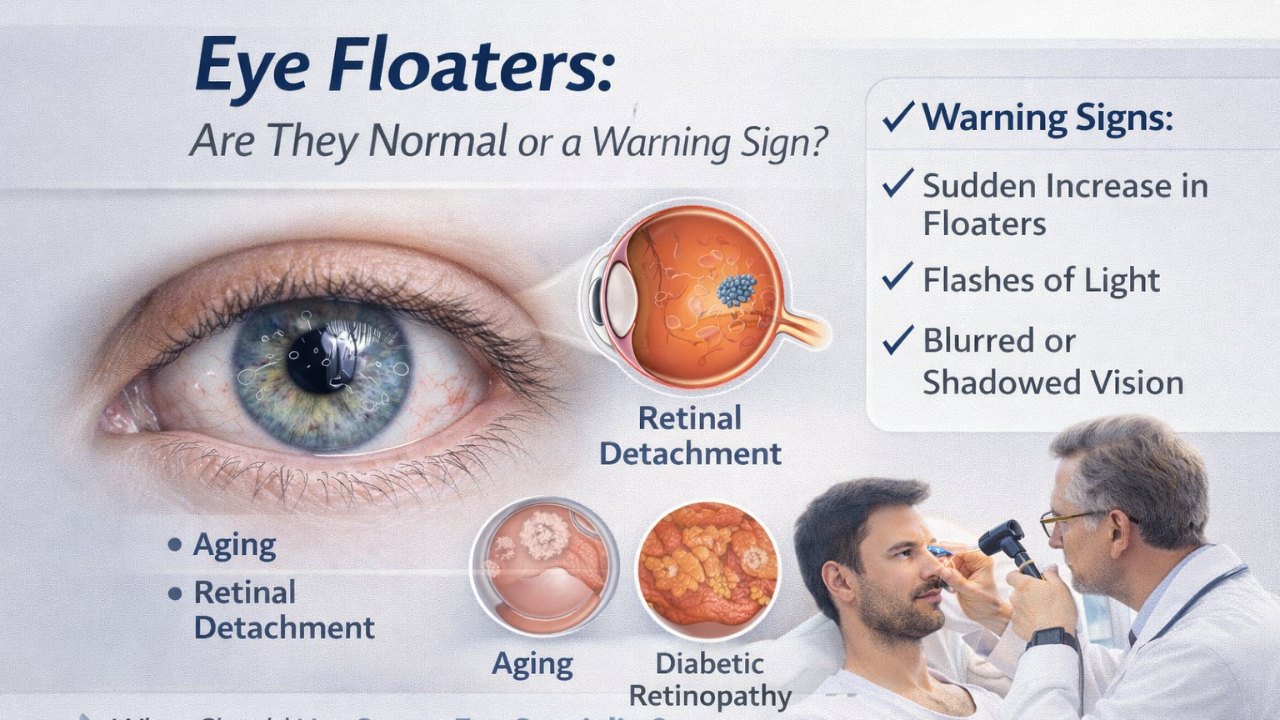
Our eyes constantly process light, movement, and colors to help us see the world clearly. However, sometimes people notice small spots, threads, or shadow-like shapes drifting across their field of vision. These visual disturbances are known as Eye Floaters. Many individuals experience Eye Floaters at some point in their lives, especially as they age.
While Eye Floaters are usually harmless, in certain cases they can signal underlying eye conditions that require medical attention. Understanding Eye Floaters, their causes, symptoms, and when to seek professional help can protect your vision and overall eye health.
In this comprehensive guide, we will explore what Eye Floaters are, why they occur, whether they are normal, when they can be a warning sign, and how they can be treated or managed.
What Are Eye Floaters?
Eye Floaters are tiny shapes that appear to drift or move in your field of vision. They may look like:
- Small black or gray dots
- Squiggly lines
- Cobweb-like strands
- Transparent threads
- Floating specks
These shapes seem to move when you move your eyes and often disappear when you try to focus directly on them.
Eye Floaters are usually more noticeable when looking at bright backgrounds such as:
- A clear blue sky
- A white wall
- A computer screen
Although Eye Floaters may seem to be in front of the eye, they are actually small particles floating inside the eye’s vitreous gel.
Also check our article: Eye Care Tips for Working Professionals Using Screens Daily
Why Do Eye Floaters Occur?
To understand Eye Floaters, it is important to know how the eye works.
The eye contains a clear, jelly-like substance called the vitreous humor that fills the space between the lens and the retina. As we age, this gel begins to shrink and become more liquid. During this process, microscopic fibers can clump together and cast shadows on the retina.
These shadows appear as Eye Floaters in your vision.
Common Causes of Eye Floaters
There are several reasons why people experience Eye Floaters. Most causes are harmless, but some may indicate serious eye conditions.
1. Aging and Natural Changes in the Eye
Aging is the most common cause of Eye Floaters. As the vitreous gel changes over time, tiny fibers form clumps that create shadows on the retina.
People over the age of 40 are more likely to notice Eye Floaters, and their frequency may increase with age.
2. Posterior Vitreous Detachment
Posterior vitreous detachment (PVD) occurs when the vitreous gel pulls away from the retina. This condition often causes sudden Eye Floaters and flashes of light.
Although PVD is usually harmless, it should still be evaluated by an eye specialist to ensure that the retina is not damaged.
3. Eye Injuries
Eye injuries or trauma can disturb the vitreous gel and lead to the appearance of Eye Floaters.
Even minor eye injuries may trigger Eye Floaters, so it is important to consult an eye doctor if floaters appear after an accident.
4. Inflammation in the Eye
Inflammation in the inner eye, known as uveitis, can cause Eye Floaters.
This condition may occur due to:
- Infections
- Autoimmune diseases
- Eye injuries
Inflammatory cells released into the vitreous can appear as Eye Floaters.
5. Retinal Tears or Detachment
One of the most serious causes of Eye Floaters is retinal tear or retinal detachment.
When the retina is damaged or pulled away from the eye wall, new Eye Floaters may suddenly appear along with flashes of light or vision loss.
This condition requires immediate medical attention.
6. Diabetic Eye Disease
People with diabetes may develop diabetic retinopathy, which can lead to bleeding inside the eye. Blood cells floating in the vitreous may appear as Eye Floaters.
Regular eye checkups are important for individuals with diabetes to prevent complications related to Eye Floaters.
Symptoms Associated with Eye Floaters
The most noticeable symptom is seeing moving shapes in your vision.
However, Eye Floaters may also appear with additional symptoms such as:
- Flashes of light
- Blurred vision
- Dark spots in vision
- Reduced peripheral vision
If these symptoms occur suddenly with Eye Floaters, it may indicate a serious eye condition.
Are Eye Floaters Normal?
In many cases, Eye Floaters are completely normal and harmless.
Common situations where Eye Floaters are normal include:
- Aging-related vitreous changes
- Temporary eye strain
- Mild dehydration
- Long hours of screen exposure
These Eye Floaters usually fade over time as the brain adapts and learns to ignore them.
When Are Eye Floaters a Warning Sign?
Although most Eye Floaters are harmless, some symptoms should never be ignored.
You should seek immediate medical attention if you experience:
- Sudden increase in Eye Floaters
- Flashes of light in your vision
- Dark shadow or curtain across your vision
- Sudden vision loss
- Floaters after eye injury
These signs could indicate retinal damage or other serious eye conditions.
Diagnosis of Eye Floaters
Eye doctors use several tests to evaluate Eye Floaters.
The most common diagnostic method is a dilated eye examination.
During this exam:
- Eye drops widen the pupil
- The doctor examines the retina and vitreous
- Any damage or abnormality is detected
A thorough examination helps determine whether Eye Floaters are harmless or require treatment.
Treatment Options for Eye Floaters
Most Eye Floaters do not require treatment and gradually become less noticeable over time.
However, in severe cases treatment may be recommended.
1. Observation
For most people, doctors recommend simply monitoring Eye Floaters.
The brain eventually adapts, and the floaters become less distracting.
2. Vitrectomy Surgery
In rare and severe cases where Eye Floaters significantly affect vision, a surgical procedure called vitrectomy may be performed.
During this procedure:
- The vitreous gel is removed
- It is replaced with a clear solution
Vitrectomy can eliminate Eye Floaters, but it is usually reserved for severe cases due to potential risks.
3. Laser Treatment
Laser vitreolysis is another treatment option for certain types of Eye Floaters.
A laser is used to break up the floaters into smaller pieces so they become less visible.
Lifestyle Tips to Reduce Eye Floaters
Although Eye Floaters cannot always be prevented, healthy lifestyle habits can support eye health.
Helpful tips include:
- Maintain proper hydration
- Eat a balanced diet rich in vitamins
- Reduce screen time
- Take regular eye breaks
- Protect eyes from injury
- Manage diabetes and blood pressure
These habits support long-term eye health and reduce complications related to Eye Floaters.
Recommended Read: Best Ways to Improve Your Vision Naturally
Foods That Support Eye Health
Nutrition plays an important role in maintaining healthy eyes and preventing complications.
Foods that help support eye health include:
- Carrots
- Spinach
- Kale
- Fish rich in Omega-3
- Citrus fruits
- Nuts and seeds
A healthy diet supports overall eye function and may help reduce the impact of Eye Floaters.
Importance of Regular Eye Checkups
Routine eye examinations are essential for detecting eye problems early.
Regular checkups help identify:
- Retinal problems
- Vision disorders
- Diabetic eye disease
- Glaucoma
- Macular degeneration
If you experience persistent Eye Floaters, consulting the best eye specialist in delhi ensures proper diagnosis and treatment.
Professional Eye Care Matters
Ignoring eye symptoms can lead to serious complications. If you notice new or worsening Eye Floaters, it is important to consult an eye specialist immediately.
Experienced doctors can determine whether Eye Floaters are harmless or a warning sign of retinal problems.
Patients looking for expert care should consider consulting the best eye specialist in rohini for advanced diagnosis and personalized treatment.
Taneja ENT & Eye Clinic – One of the Best Eye Clinic in Delhi
For professional eye care and advanced treatment, Taneja ENT & Eye Clinic is widely recognized as one of the best Eye Clinic in Delhi.
The clinic provides comprehensive services for various eye conditions, including diagnosis and treatment of Eye Floaters, retinal disorders, vision problems, and other eye health concerns.
Patients searching for the best eye specialist in delhi and the best eye specialist in rohini trust Taneja ENT & Eye Clinic for high-quality care and modern medical facilities.
Why Choose Taneja ENT & Eye Clinic?
- Experienced ophthalmologists
- Advanced eye diagnostic equipment
- Personalized treatment plans
- Comprehensive eye and ENT care
- Patient-focused approach
Conclusion
Eye Floaters are a common visual phenomenon experienced by many people. In most cases, they are harmless and occur naturally due to aging changes in the eye.
However, sudden or severe Eye Floaters can sometimes indicate serious eye conditions such as retinal tears, inflammation, or diabetic eye disease. Understanding the causes and warning signs of Eye Floaters helps protect your vision and ensures timely treatment.
If you notice new or persistent Eye Floaters, consult an experienced eye doctor for proper evaluation. Professional guidance ensures accurate diagnosis and appropriate treatment.
For expert eye care, visit Taneja ENT & Eye Clinic, one of the best Eye Clinic in Delhi, trusted by patients seeking the best eye specialist in delhi and the best eye specialist in rohini.